darra bishop

Interiors, space branding & learning environments

Attention is the whole job. Bespoke scales from a loft to a classroom.

Homes, lofts, shops, offices, classrooms. The same bespoke attention, whatever the scale.

Selected work

In the details

The Smurf collection, up close and housed in a vintage airline ticketing booth
Custom WC signage, 500 Molino
Pebble-metal backsplash, 500 Molino
Pool bath, Sunset Plaza Drive
Focal tile wall with a modular medicine cabinet, 1600 Vine
Floating shelves for holiday-themed Smurfs
Soaking tub and pebble floor as reflected in a built-in mirror, 500 Molino
Gilded arabesque backsplash, 1600 Vine

The longer story

HollidaysburgParisPittsburghLos Angeles

My first fully immersive design project was a raw loft at 500 Molino Street. Four walls providing a shell for transformation and experimentation.

Most spaces are designed for the people who'll live there before anyone arrives, deciding in advance how you're supposed to live in them. This one decided nothing. I got to design it entirely around how I wanted to live, and that freedom is what hooked me.

That same instinct is why designing for students is the work I find most rewarding. The shift I care about puts the student at the center of the room instead of at its mercy: real options about how to sit, whether to work alone or with someone, where to focus. Give a kid those choices and you hand them agency over their own day. I didn't have that at their age, and I don't think my experience was unusual. A lot of us grew up being told how to behave, without much room to color outside the lines.

Paris showed me another world. I was still acting inside a required framework there, but I was exposed to a different way of life, to beauty realized in architecture, food, art, and personal style, all of it largely absent from my earliest years. So much of it was remarkable: the cobblestone streets, the history, the way the everyday got elevated into something worth noticing. It shaped how I process my surroundings to this day.

Pittsburgh has an industrial romance to its architecture that still pulls at me. And it's full of Tudor mansions and historic academic-revival buildings whose interiors I want to work against, setting modern furnishings and elements into those old rooms so the contemporary and the historic sharpen each other.

Los Angeles is a different draw. Anything you want to find is here, but you have to know where to look. The old downtown theaters are the example I go back to. You could pass the aging façade and never guess at the spectacular architecture waiting inside. For a while I was a docent at the Eames Case Study House, about as pure an example as there is of a home built around how its owners meant to live.

Sectors
Residential, tenant improvement, live/work lofts
Boutique hospitality, offices, space branding
K-12 learning environments
Practices
bespoke design · minds@work
Drawn to
The unconventional, and collections & display
One number
The Culver, post-renovation rents up 15-22%
Writing

People keep the things that mean something to them. What they do with those things next is where it gets interesting.

Most collections end up scattered. A few pieces on a windowsill, more in a drawer, the rest in a box in the closet that gets opened twice a year. The owner still loves every one of them. But love with no place to live reads, to everyone else, as clutter, and the objects lose the very thing that made them worth keeping.

It hardly matters what the collection is. Books, vinyl, shoes, sculpture, Smurfs. Given the right space, any of them can be elevated. That space is not a museum. It is respected, accessible, and intentional, a place built to hold a passion where it can actually be seen.

A collection like that deserves a home made for it, considered and edited and easy to stand in front of. Close enough to reach, never so reverent that no one dares touch it. The point is to make it legible, so the thing you love reads as something you chose rather than something you stepped around.

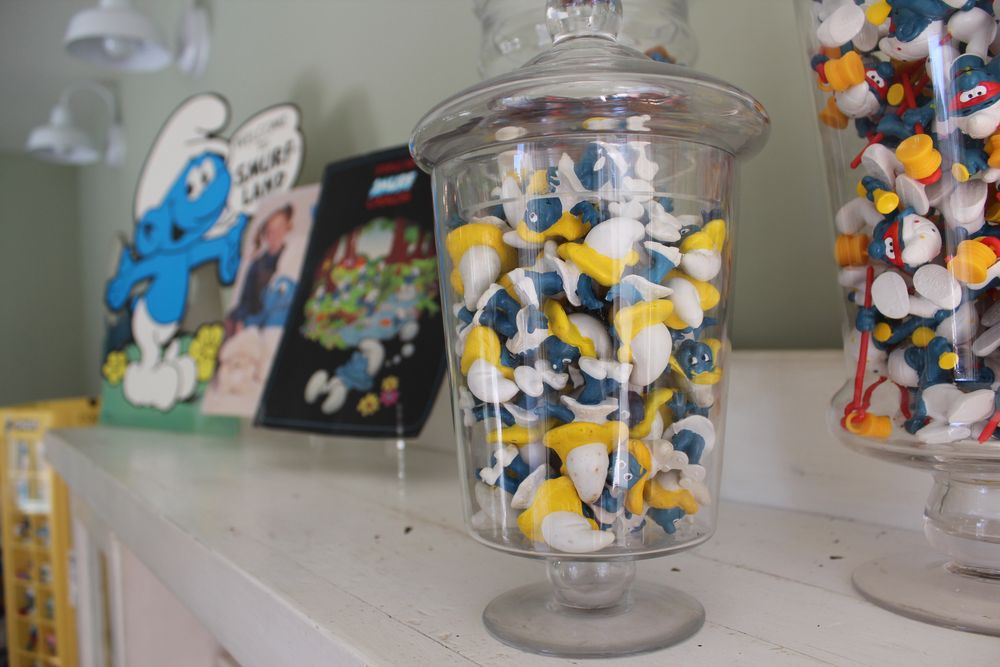
Give a collection that kind of room and it changes state. It stops being stuff and becomes a statement about the person who assembled it. I once designed an entire space around a client's Smurf collection: glass candy jars packed with figurines, a vintage airline ticketing booth holding dozens more, and old display cases, interesting in their own right, filled with the carefully curated and precious pieces. Same figures they had owned for years. The room came out playful and joyful, and the collection turned into a story you wanted to hear.

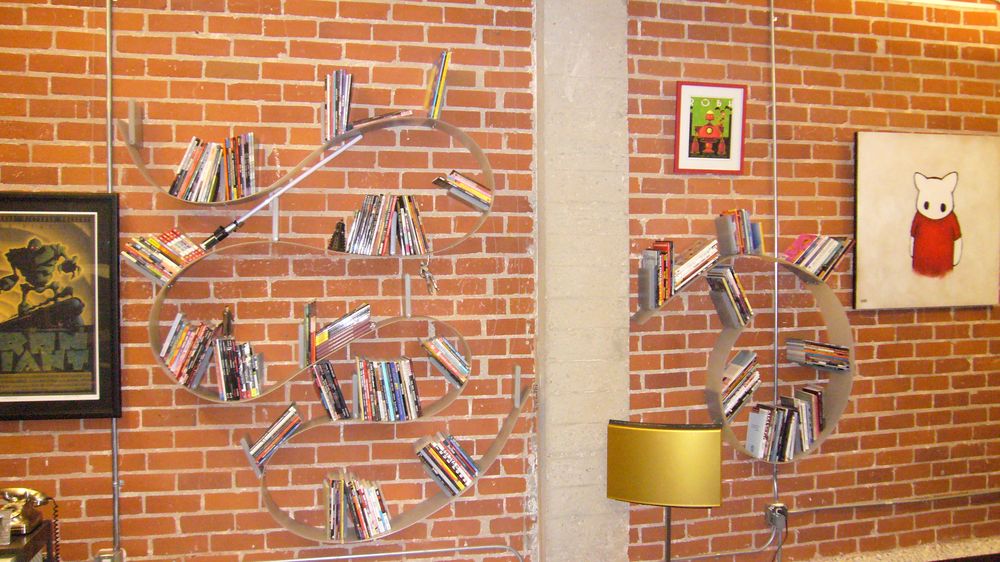
A book collection on a Ron Arad Bookworm shelf, lightsaber included
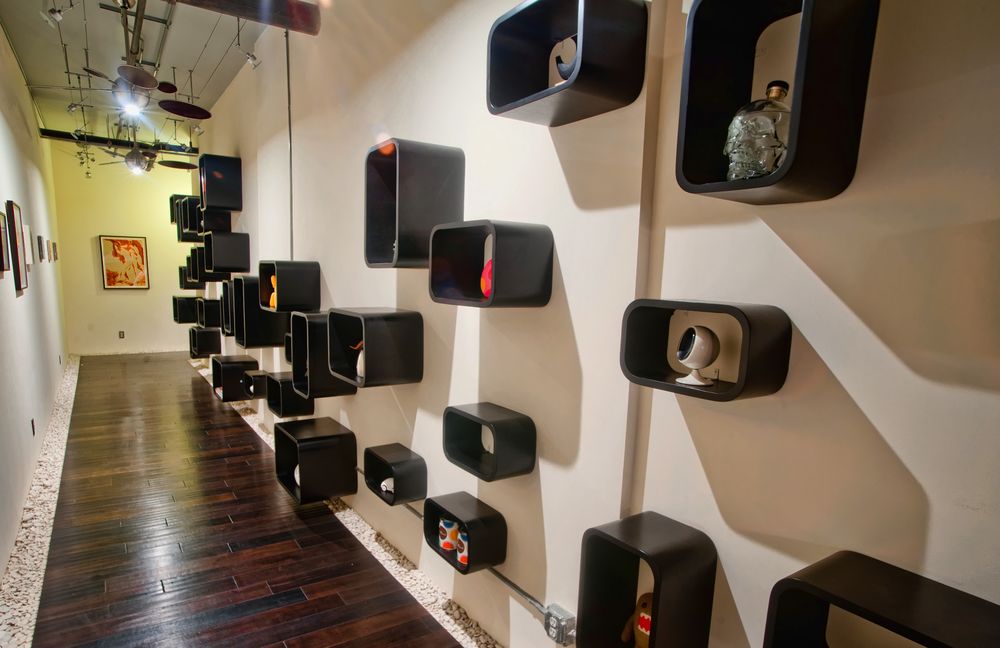
Floating radius-corner shelves, 500 Molino
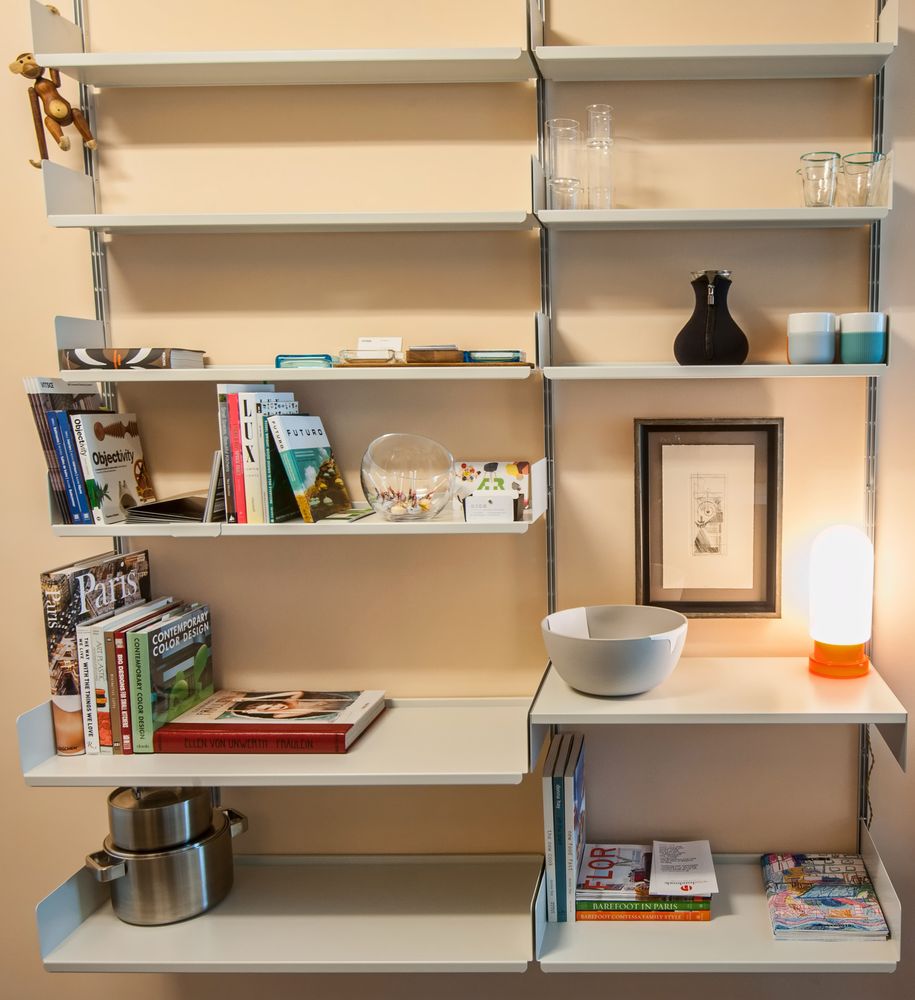
A curated kitchen shelf, 1600 Vine (Dwell on Design)
Smurfs displayed like candy in the Smurf Emporium

The reverse happens just as reliably. When no one gives the display any thought, a collection loses standing in its own home. It becomes something to dust, then something to apologize for. That neglect is a design decision too. It just went unspoken.

A shelf is never neutral. What you set at eye level, and what you let sink to the bottom of a closet, is an argument about what matters to you. I would rather make that argument on purpose.

Coming soon / August 2026

The kid never gets a vote in the furniture

Coming soon / September 2026

The research behind a future-ready classroom is solid. The room rarely is.

Motion